家庭服务机器人 · 交互设计Household service robots · Interaction design个人研究与概念设计Independent research & concept design
何为完成What Counts as Complete?
让人知道何时可以放手:家务机器人叠衣任务的交互逻辑与多模态反馈Knowing when to let go: interaction logic and multimodal feedback for a household robot’s folding task
从一场 10 人英国小组访谈出发,以未来的启元 T1 叠衣为场景,定义交互逻辑与多模态反馈规则,并设计可用性测试。From a ten-person UK group interview, using a future Qiyuan T1 folding laundry as the scene, I defined the interaction logic and multimodal feedback rules, and designed a usability test.
我的角色My role
研究、交互逻辑与反馈规则、可用性测试设计Research, interaction logic & feedback rules, usability test design
会做家务,不等于人能放心交出去。怎样让人知道何时放手、何时接手?Doing a chore is not the same as being trusted with it. How do people know when to let go and when to take over?
访谈里,折叠仍由人完成,人们怀疑的是结果是否可靠。In the interview, folding was still done by people, and what they doubted was whether results could be relied on.
关键取舍 01Key decision 01
为什么让信任相称,而不是增强?Why matched trust, not more trust?
愿意托付不等于托付合理:做得到时放手,做不到时接手。Willing is not the same as right: let go when it can, take over when it cannot.
代价Trade-off机器人会更常停下求助。The robot stops to ask for help more often.
关键取舍 02Key decision 02
为什么先核对,再报告?Why check before reporting?
停下、待机、闭眼都证明不了结果;检查通过才报完成。Stopping, standing by or closing its eyes proves nothing; only a passed check means done.
代价Trade-off收尾更慢。Finishing takes longer.
设计方法 · 三部分、七步Method · three parts, seven steps
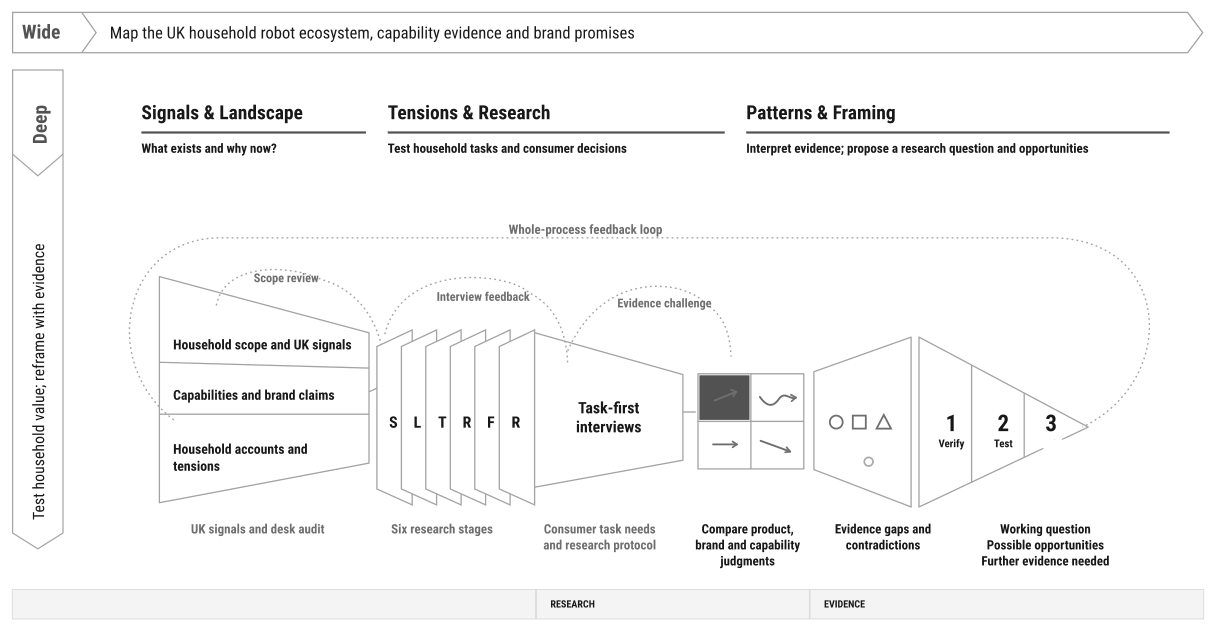
设计方法图:从左到右的流程。左上是依据:一场英国小组访谈,10 人围桌,其中 7 人发言。第一部分系统分析有五步:01 用四个角标框出问题,机器人与 App 在框内,其余在框外;02 在周围放三类假设角色;03 画出一次叠衣,报告前先检查,并有补救、停下的分支;04 画出监督加重的加强循环;05 在同一张图上标出控制、过程、完成、异常四个杠杆点。第二部分干预设计:06 是肢体动作、视觉与语音、App 三个通道在任务各状态里的规则。第三部分原型验证:07 用无解说分镜请约 5 人测试,改后复测,以虚线表示待验证方案。07 下方是产出:交互规范与待测问题,分已确认、假设、待验证三类。The method as a flow from left to right. At top left, the evidence: a UK group interview, ten round a table, seven of whom spoke. Part I, system mapping, has five steps: 01 frames the problem, with the robot and its app inside four corner marks and everything else outside; 02 places three assumed roles around it; 03 maps one folding task, with a check before the report and a branch to repair and stop; 04 draws the reinforcing loop of supervision; 05 picks out four leverage points on the same map: control, process, completion and exceptions. Part II, intervention design: 06 sets rules on three channels, body, visual and voice, and the app, across the states of the task. Part III, prototype validation: 07 shows unnarrated storyboards to about five people and loops back to revise and retest, drawn dashed as a proposal to be validated. Under 07, the output: interaction standards and open questions, sorted as confirmed, assumed and to be tested.
第一部分Part I
系统分析System mapping
找出交互能介入的地方。Where interaction can step in.
01 / 定义问题Problem framing
会做家务,不等于能被托付Doing a chore is not the same as being trusted with it
研究依据 · 英国小组访谈 · 10 人参与、7 人发言 · 7 份材料Evidence · UK group interview · 10 took part, 7 spoke · 7 source files
洗衣 · 分析实例Laundry · example
1/ 5步由家电完成steps covered by an appliance
家电已覆盖Covered by an appliance
仍由人完成Still done by people
愿意交出Willing to delegate
判断留给自己Judgement kept
三款参考产品 · 公开资料Three reference products · public information
01
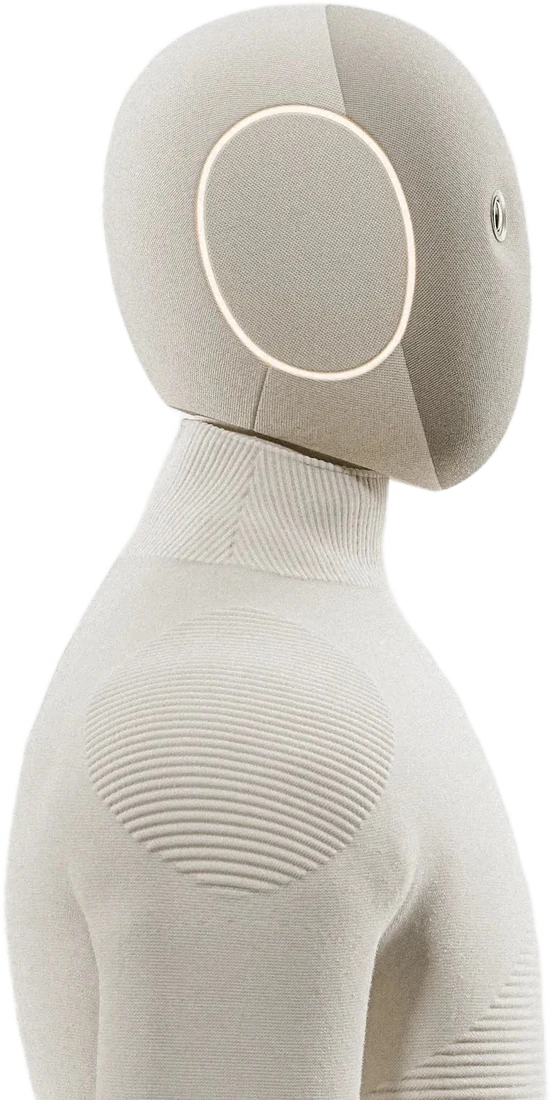
1X NEO
宣称任务Claimed tasks
家务Home tasks
公开阶段Public stage
开放预订Reservation
证据条件Evidence
厂商宣称Maker claims
外观线索Form cue
针织外层Knit outer layer
02
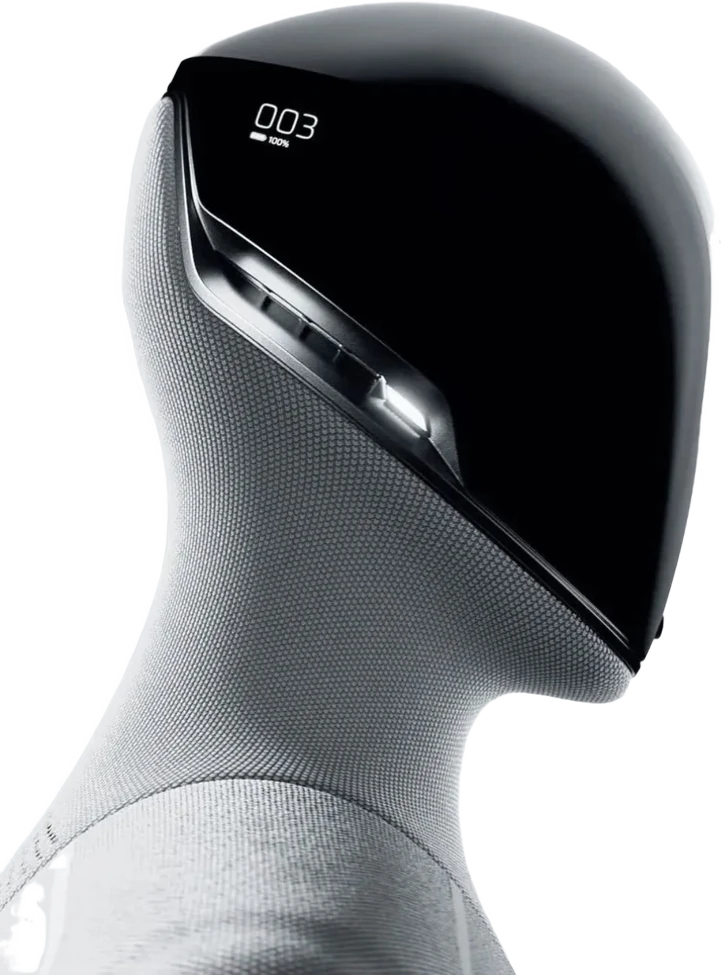
Figure 03Helix
宣称任务Claimed tasks
3 项家务3 home tasks
公开阶段Public stage
实地测试Field test
证据条件Evidence
30 个美国家庭30 US homes
外观线索Form cue
黑色面罩 · 织物包覆Black visor · textile covering
03
Sunday Memo
宣称任务Claimed tasks
收桌洗碗 · 做咖啡 · 叠衣服Dishes · coffee · laundry
公开阶段Public stage
内测报名Beta applications
证据条件Evidence
厂商未剪辑视频Maker’s uncut videos
外观线索Form cue
硅胶软壳 · 戴帽子Soft silicone shell · wears a hat
本项目的设定What this project sets
已确认决定Confirmed decision
一次叠衣任务One folding task
已确认决定Confirmed decision
启元 T1 外形The Qiyuan T1’s form个人项目,非启元官方Personal project, not Qiyuan’s
研究过程:从访谈材料到「完成」的定义Research process: from interview material to a definition of “complete”
当时的研究问题The research question then英国普通消费者如何根据任务结果质量、家务流程的覆盖程度和所需的人工协助,判断家庭服务机器人是否已是成熟的消费产品?How do ordinary UK consumers judge whether household service robots are mature consumer products—based on task outcome quality, coverage of household workflows and the human help required?
02 / 利益相关者Stakeholders
三类角色,围绕一个系统Three roles around one system
围绕系统的三类假设角色:家庭使用者确定标准、决定是否再次托付;同住者与路过者共享通道,可能提出冲突要求,机器人以询问回应;服务提供方提供默认标准与能力支持,不替家庭定要求。机器人与 App 是系统要素,不算利益相关者。Three assumed roles around the system: the household user sets the standard and decides whether to hand the task over again; others at home share the passages and may make conflicting requests, which the robot answers by asking; the service provider supplies defaults and capability but never sets on-site rules. The robot and its app are parts of the system, not stakeholders.
03 / 系统建模System map
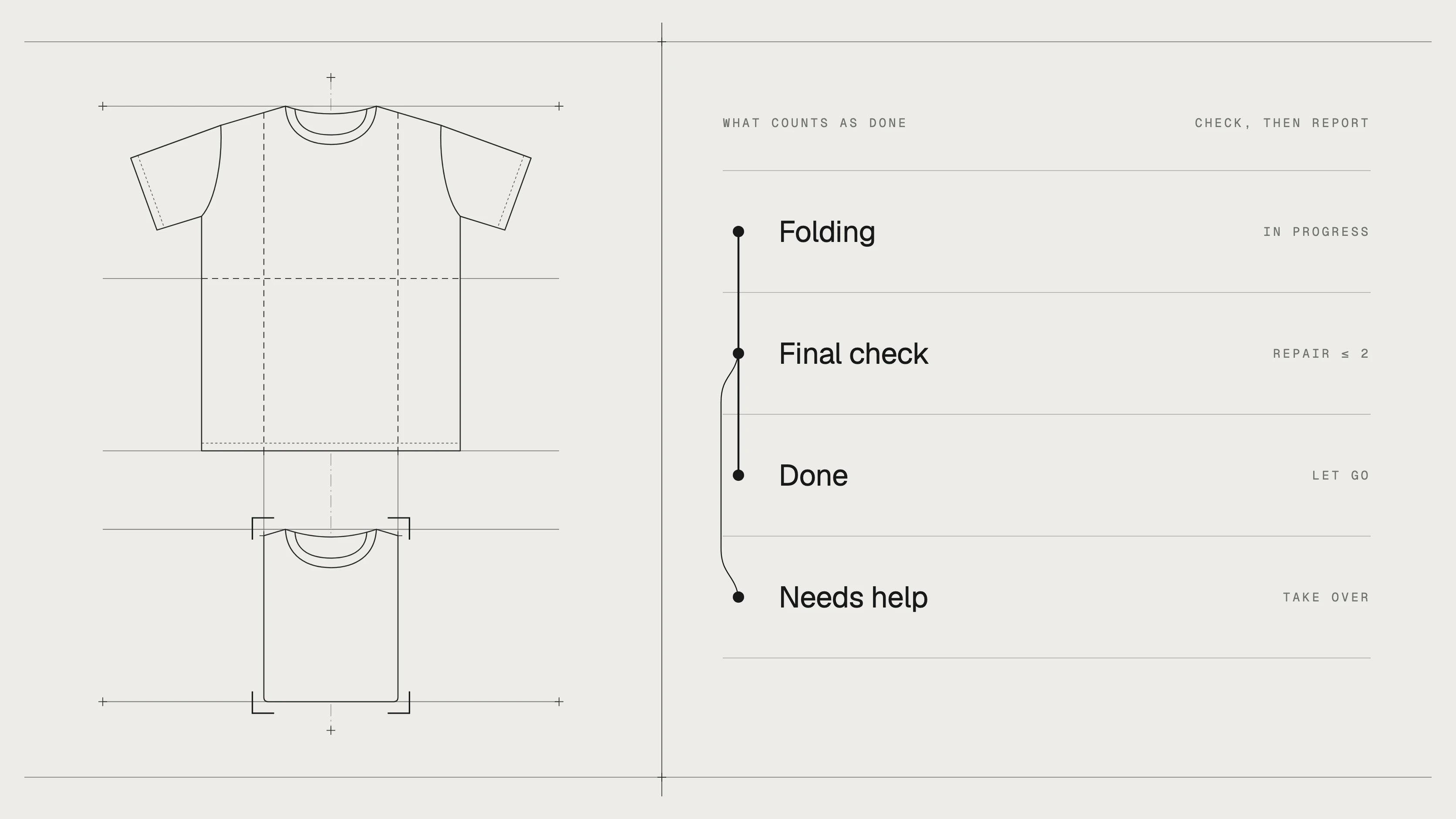
一次叠衣:先核对,再报告One folding task: check first, then report
已确认决定Confirmed decision边界 · 家中一次叠衣 · 不远程 · 不上云Boundary · one folding task at home · no remote control · no cloud
一次叠衣任务:人确定标准;T1 叠衣,未叠与已叠分堆显示进度;结束前对照标准检查。满足标准就如实报告完成;可逆问题有限补救(最多两次)后重新判断;仍失败或无法可靠判断,就停下说明障碍,不报告成功;任意时刻发现不可逆风险也会停下。最后都由人理解结果,决定调整、介入或再次托付。One folding task. The person sets the standard; the T1 folds, with unfolded and folded piles showing progress; before finishing it checks against the standard. If the standard is met it reports done truthfully. A reversible problem gets a limited repair (up to two tries) and is checked again. If it still fails, or the robot cannot tell, it stops and explains the obstacle without reporting success; an irreversible risk stops it at any moment. Either way the person understands the result and decides to adjust, step in or hand the task over again.三层分开,不能互相代替Three layers kept apart
候选反馈机制:状态难理解,导致反复确认与介入,使用负担增加,托付意愿降低,监督更密集,又带来更多确认。A candidate feedback loop: when state is hard to read, people check and step in repeatedly, the effort of use rises, willingness to hand over falls and supervision gets closer, which brings more checking.
设计假设Design assumption反方向:求助看起来像完成 → 人误判The other way round: a call for help that looks like “done” → people misjudge
05 / 杠杆点Leverage points
四个候选杠杆:改变人理解任务的方式Four candidate levers: changing how people read the task
设计假设Design assumption系统图上的四个候选杠杆Four candidate levers on the system map
同一张系统图上的四个候选杠杆:控制在设定标准处(标准难改),过程在叠衣本身(进度难读),完成在报告处(承诺可能与结果脱节),异常在停下处(失败容易像完成)。The same map with four candidate levers: control at the standard (it is hard to change), process at the folding itself (progress is hard to read), completion at the report (a claim of done can drift from the result), and exceptions at the stop (failure can look like done).
第二部分Part II
干预设计Intervention design
把杠杆落到行为、表达与记录上。Levers become behaviour, expression and records.
06 / 干预与变革理论Intervention
从表达到判断:多模态反馈规则From signal to judgement: multimodal feedback rules
变革理论Theory of change
01候选断点Break point
02交互表达与行为Signal and behaviour
03理解状态,判断介入Reading the state, judging when to step in
04托付意愿Willingness to hand over
前提Precondition真实的任务能力real capability
好结果Good outcome少监督,且判断正确less supervision, judged right
多模态反馈规则 · 一次叠衣Multimodal feedback rules · one folding task
一次叠衣的多模态反馈规则:状态 × 通道Multimodal feedback rules for one folding task: states by channel
待验证方案To be validated执行中Working已确认决定Confirmed decision听到修改A spoken change已确认决定Confirmed decision结束前检查Final check已确认决定Confirmed decision完成Done已确认决定Confirmed decision待机Standby
肢体动作Body低头对衣物 · 让路Head down to the clothes; clears the way检查 · 补救最多两次Checks; repairs two times at most站立待机Stands by
视觉与语音Visual & voice分堆显示进度 · 不播报Two piles show progress; no commentary复述「叠松一点」Reads it back: “fold it looser”如实报告完成Reports done truthfully设计假设Design assumption候选:闭眼光带Candidate: closed-eye light band与完成区分开Distinct from done
AppApp记录Logged留有记录On record
待验证方案To be validated执行中Working
低头对衣物 · 让路Head down to the clothes; clears the way
分堆显示进度 · 不播报Two piles show progress; no commentary
已确认决定Confirmed decision听到修改A spoken change
复述「叠松一点」Reads it back: “fold it looser”
记录Logged
已确认决定Confirmed decision结束前检查Final check
检查 · 补救最多两次Checks; repairs two times at most
已确认决定Confirmed decision完成Done
如实报告完成Reports done truthfully
留有记录On record
设计假设Design assumption候选:闭眼光带Candidate: closed-eye light band
已确认决定Confirmed decision待机Standby
站立待机Stands by
与完成区分开Distinct from done
三种打断Three interruptions
已确认决定Confirmed decision求助Needs help
补救两次仍失败,或无法判断Two repairs fail, or it cannot tell
停下Stops
说明障碍 · 不报完成Explains the obstacle; not reported as done
留有记录On record
已确认决定Confirmed decision风险停止Risk stop
任意时刻发现不可逆风险An irreversible risk, at any moment
立即停下Stops at once
告知原因Says why
留有记录On record
已确认决定Confirmed decision冲突暂停Conflict pause
有人提出不同要求Someone asks for something different
暂停Pauses
问最后说话的人 · 不代表更高权限Asks the last speaker, who gains no higher authority
闭眼的边界Where closed eyes stop
已确认决定Confirmed decision顺序:Order:
检查Check
补救 ≤ 2Repair ≤ 2
闭眼Closed eyes设计假设Design assumption
×不允许:Not allowed:
闭眼Closed eyes
补救Repair
已确认决定Confirmed decision不是每次完成都要闭眼Not every finish needs closed eyes
待验证方案To be validated闭眼会不会被读成完成或摄像头关Are closed eyes read as done, or as the camera being off?
第三部分Part III
原型验证Prototype validation
用无解说分镜做可用性测试。A usability test with unnarrated storyboards.
07 / 原型与测试Prototype & test
可用性测试:人能否分清完成与求助Usability test: can people tell “done” from “needs help”?