← 返回作品← Back to work项目 08Project 08
导盲犬的工作状态与福祉Guide-dog wellbeing个人独立概念Independent concept

导盲犬安心伴侣Human–Canine Peace of Mind Companion

帮助视障主人察觉导盲犬状态变化的穿戴设备概念A wearable concept that helps visually impaired owners notice changes in their guide dog

以穿戴形态、非视觉反馈与主人主导的决策,连接日常导盲出行。A daily guiding concept linking wearable form, nonvisual feedback and owner-led choices.

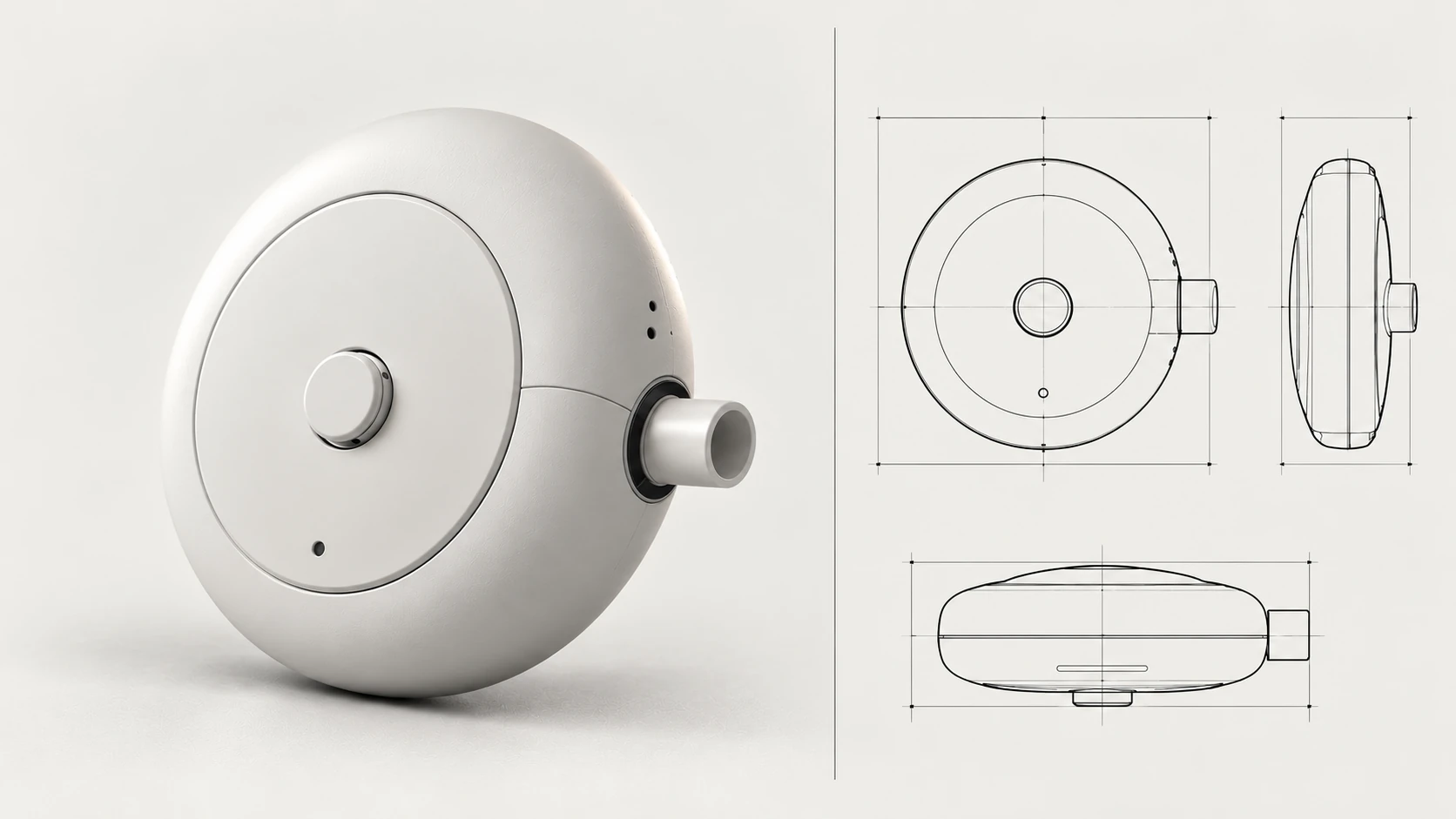
White circular wearable concept with a central control, side cartridge and front, side and top schematic views on a pale background.
我的角色My role
穿戴产品与交互设计Wearable product & interaction design
关注点Focus
旅程梳理 · 形态比较 · 非视觉交互Journey framing · Form comparison · Nonvisual interaction
问题定义The question

如何让导盲犬的状态更易被察觉,并把决定权留给主人?How might changes in a guide dog’s state become easier to notice, while leaving decisions with the owner?

导盲犬长期在拥挤与噪声中工作。压力迹象(舔鼻、耳朵后压、尾巴下垂)多是视觉信号,视障主人很难察觉,而导盲犬状态下降又直接影响主人的出行安全。Guide dogs work in crowds and noise. Signs of stress—nose licking, flattened ears, a lowered tail—are visual, so a visually impaired handler can miss them, and a decline affects the handler’s own safety.

  1. 关键取舍 01Key decision 01

    为什么选择圆形单一按压入口,而不是带状双端结构?Why a round housing with one press target, rather than a band with paired ends?

    主人要靠触摸找到设备。圆形外壳只有一个中央按压目标,更容易凭手感找到,体积也集中在背带局部;带状双端结构触达和安装都更复杂。Handlers find the device by touch. The round housing has one central target that is easy to locate by hand and a compact footprint on the harness; the paired-end band is harder to reach and to mount.

    代价Trade-off内部空间更有限,部件必须排布得更紧凑。Less internal space, so the parts must pack tightly.

  2. 关键取舍 02Key decision 02

    为什么由主人决定,而不是设备自动干预?Why let the owner decide, rather than intervening automatically?

    压力迹象很难被准确感测,自动干预可能误判。设备只提示「状态有变化」,由主人检查后决定是否休息或调整路线。Stress signs are hard to sense reliably, and automatic intervention could misjudge. The device only signals that something has changed; the owner checks and decides whether to rest or reroute.

    代价Trade-off设备不会主动安抚导盲犬,所有处理都要等主人判断。The device never calms the dog on its own; every response waits for the owner.

01 / 研究Research

桌面研究与深度访谈:​主人为什么很难察觉导盲犬的压力Desk research and interviews: why owners struggle to notice their dog’s stress

桌面研究Desk research

导盲犬稀缺而珍贵,​它的状态却很难被主人看见Guide dogs are scarce and precious, yet their state is hard for the owner to see

P. Marks · Communications of the ACM · 2025-02-25

约 2%≈2%
需要导盲犬的视障者中,真正用上的比例of visually impaired people who need a guide dog actually get one
约 400 只≈400
中国的导盲犬,对应约 2000 万视障者guide dogs in China, for about 20 million people with sight loss
桌面研究 · 压力信号几乎都靠眼睛看Desk research · stress signals are almost all visual

这些信号,很难被主人看见These signals are hard for the owner to see

American Kennel Club · Signs of stress in dogs

深度访谈In-depth interviews
受访者 A · 导盲犬训导员Interviewee A · guide-dog trainer
“智能抗命最难。过马路时主人说「走」,但有车开过来,狗得自己决定停下。这是很大的压力来源。”“Intelligent disobedience is the hardest. At a crossing the owner says ‘go’, but a car is coming, and the dog has to decide to stop on its own. That is a huge source of stress.”
“我们尽量模拟真实环境,但真实的城市比任何训练场都复杂得多。”“We simulate real environments as best we can, but a real city is far more complex than any training ground.”
受访者 B · 视障导盲犬使用者Interviewee B · visually impaired handler
“我知道它会累,但很难分清是身体累还是心里紧张。它不会说话,我只能靠它的动作和呼吸来判断。”“I know it gets tired, but it’s often hard to tell whether that is physical fatigue or stress. It can’t speak, so I can only judge by its movement and breathing.”
“早高峰的公交太挤,它没地方趴下,只能站着,还会被包和脚碰到。我能感觉到它在忍。”“At rush hour the bus is so crowded that it has no room to lie down. It has to stand, and gets knocked by bags and feet. I can feel it putting up with it.”
共同需求Shared needs
  • 不用眼睛也能察觉状态Notice the dog’s state without sight
  • 及时休息Rest in time
  • 减少公众干扰Less interference from the public
  • 由主人决定下一步The owner decides the next step
02 / 设计框架Design framing

导盲犬、主人与支持方的需求Needs of the dog, the owner and support
Design for both sides of the harnessThe guide dog’s wearable footprint, the owner’s touch and sound access, and support professionals’ event records inform a shared-routine design brief. This is source-based design synthesis.Guide dogOwnerSupportWearable footprintTouch + soundEvent recordShared routineStakeholder design framingGuide dog: wearable footprint. Owner: touch and sound. Support: event record. All inform a shared-routine design brief.Guide dogOwnerSupportWearable footprintTouch + soundEvent recordShared routine
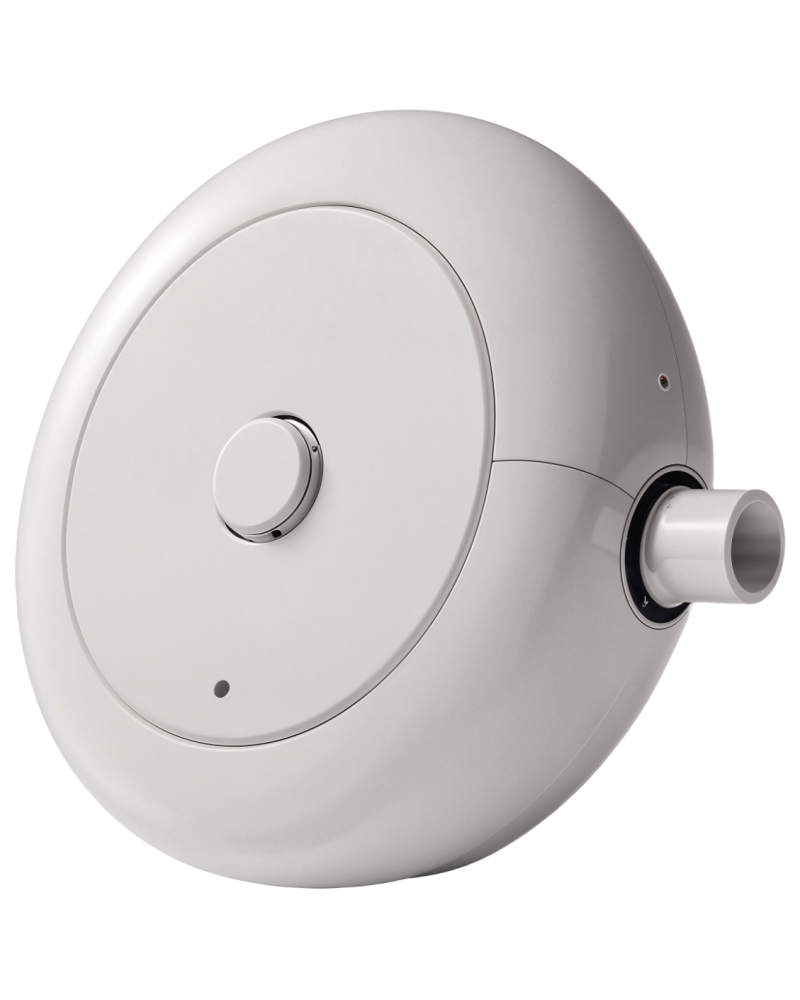
Original round wearable concept render with a central press control and a side cartridge.
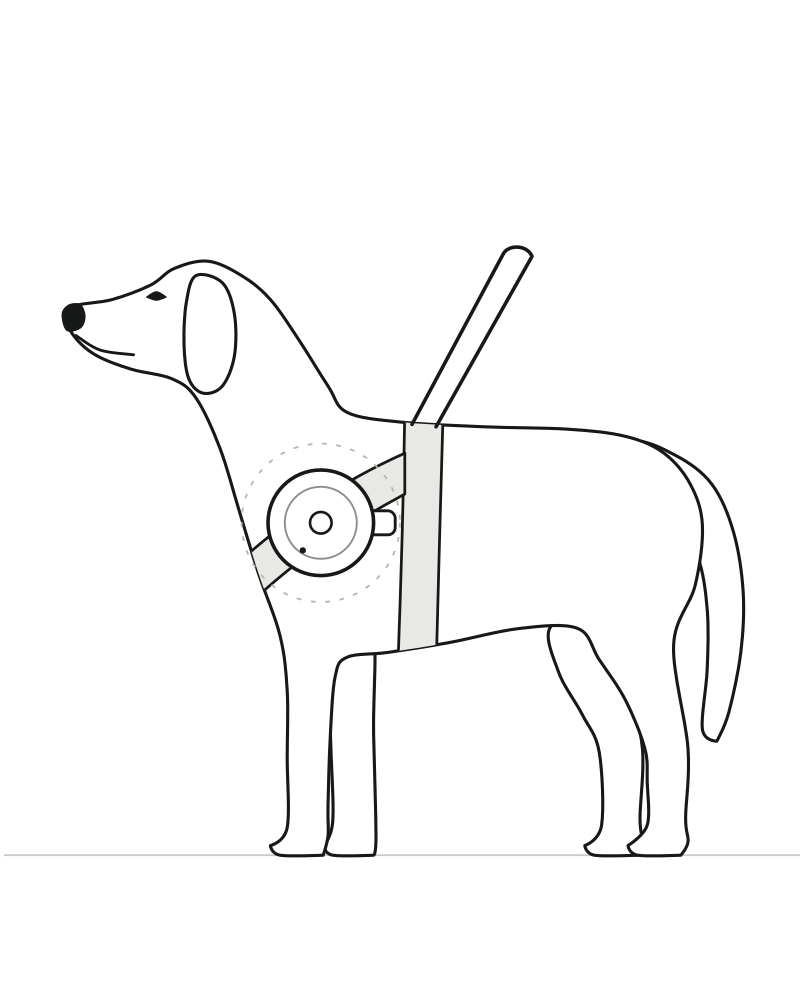
Line drawing of a guide dog in harness, with the round wearable mounted on the chest strap at the shoulder.
03 / 旅程与范围Journey & scope

聚焦导盲犬的日常出行Focused on the guide dog’s daily work

From the guide-dog lifecycle to an owner-led daily use loopDaily work is selected from six lifecycle stages. The proposed sequence is prepare, travel, notice and decide, then review; a return arrow links review to preparation.SOURCE LIFECYCLEBreedingTrainingJoint trainingDaily workAssessmentRetirementProject scopeDAILY USE LOOPPrepareCheck readinessTravelQuery availabilityNotice & decideOwner choiceReviewEvent recordDaily work scope and the proposed owner-led use loopA six-stage lifecycle selects daily work. Below, four illustrated stages connect vertically: prepare, travel, notice and decide, then review and return to prepare.SOURCE LIFECYCLEBreedingTrainingJoint trainingDaily workAssessmentRetirementScopeDAILY USE LOOPPrepareCheck readinessTravelQuery availabilityNotice & decideOwner choiceReviewEvent record
04 / 形态选择Form choices

圆形单一按压与带状双端结构的比较Round single target vs. paired-end band

Round housing with a single central target (chosen) and a paired-end band, compared on target, reach and mounting.01 圆形外壳Round housing02 带状双端结构Paired-end band选定Chosen选定Chosen12311231单一按压目标Single target2部件集中在一处Local package3手部触达Hand reach1两个端部元件Paired elements2部件分布在带身Spanning package3安装贴合Attachment fit比较维度Compared on按压目标Target触达Reach安装方式MountingRound housing (chosen) and paired-end band, compared on target, reach and mounting.01 圆形外壳Round housing选定Chosen选定Chosen1231单一按压目标Single target2部件集中在一处Local package3手部触达Hand reach02 带状双端结构Paired-end band11231两个端部元件Paired elements2部件分布在带身Spanning package3安装贴合Attachment fit比较维度Compared on按压目标Target触达Reach安装方式Mounting
05 / 产品结构Product architecture

按压入口与内部部件Press target and internal parts
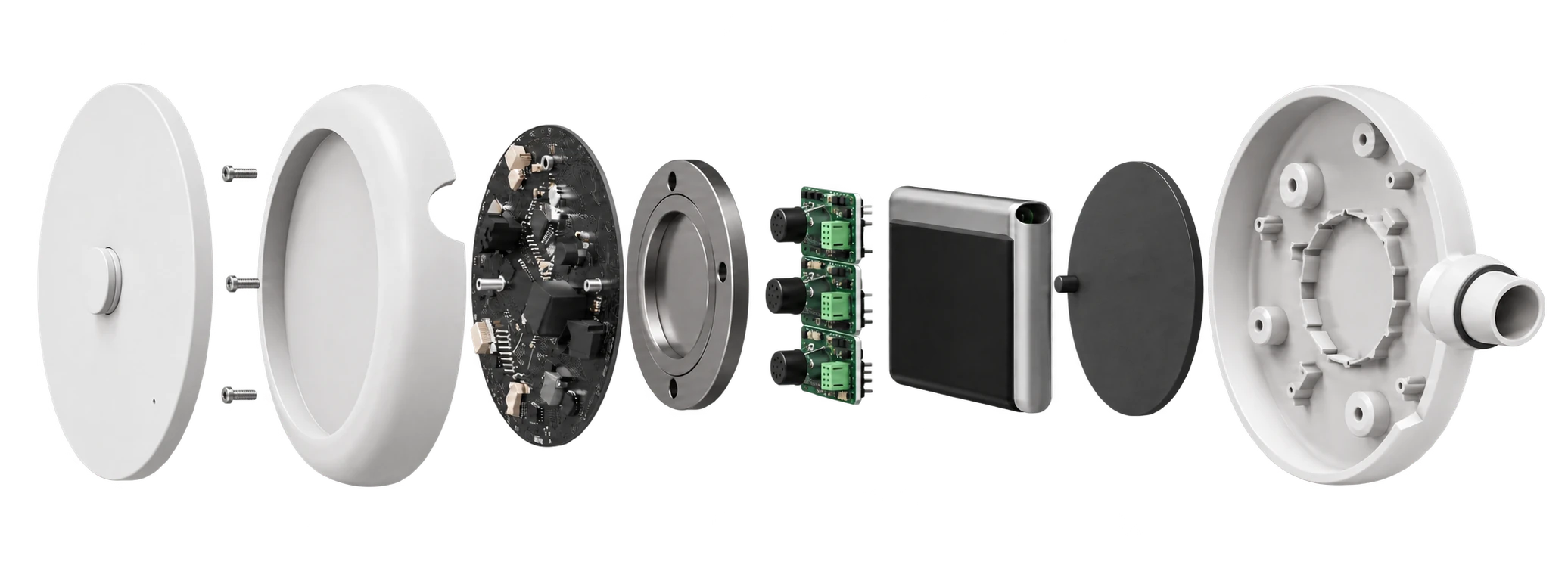
Horizontal exploded concept illustration adapted from the original eight-part wearable assembly: top cover, housing, circuit board, metal ring, sensor-board group, battery, spacer and bottom shell with cartridge.
06 / 交互逻辑Interaction logic

状态提示、主人决策与异常恢复Status, owner choice and recovery
Owner-led notification and device recovery statesA connected device communicates a change for the owner to check. Disconnection leads to owner reconnection, and low battery leads to owner recharging. Both recovery paths end with a readiness check.ConnectedAvailableChangeTouch + soundOwner checksContext + choiceDisconnectedUnavailableReconnectOwner actionLow batteryPower warningRechargeOwner actionReadyCheck readinessAn owner checks changes and restores availabilityConnected, change and owner checks form the normal sequence. Two recovery branches lead from disconnected to reconnect and from low battery to recharge. Both lead to ready, which requires a readiness check.ConnectedAvailableChangeTouch + soundOwner checksContext + choiceDisconnectedLow batteryReconnectRechargeReadyCheck readiness
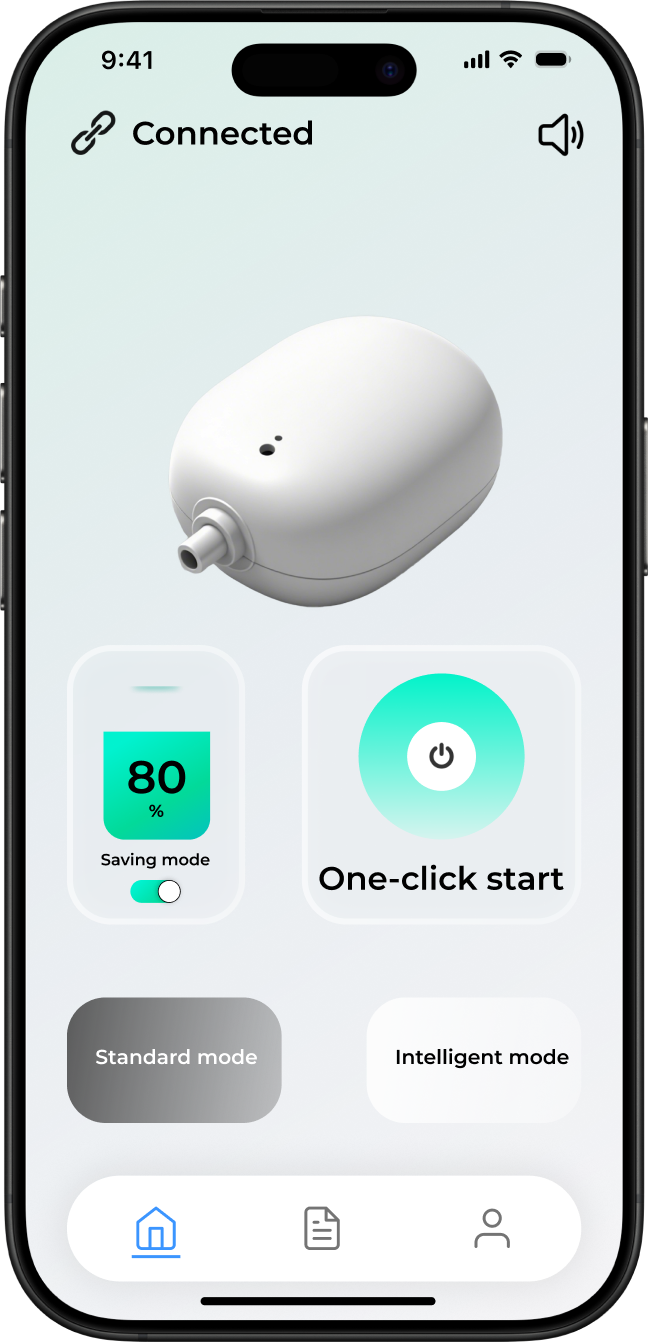
Original app dashboard mockup showing connection status, battery and a prominent start control.
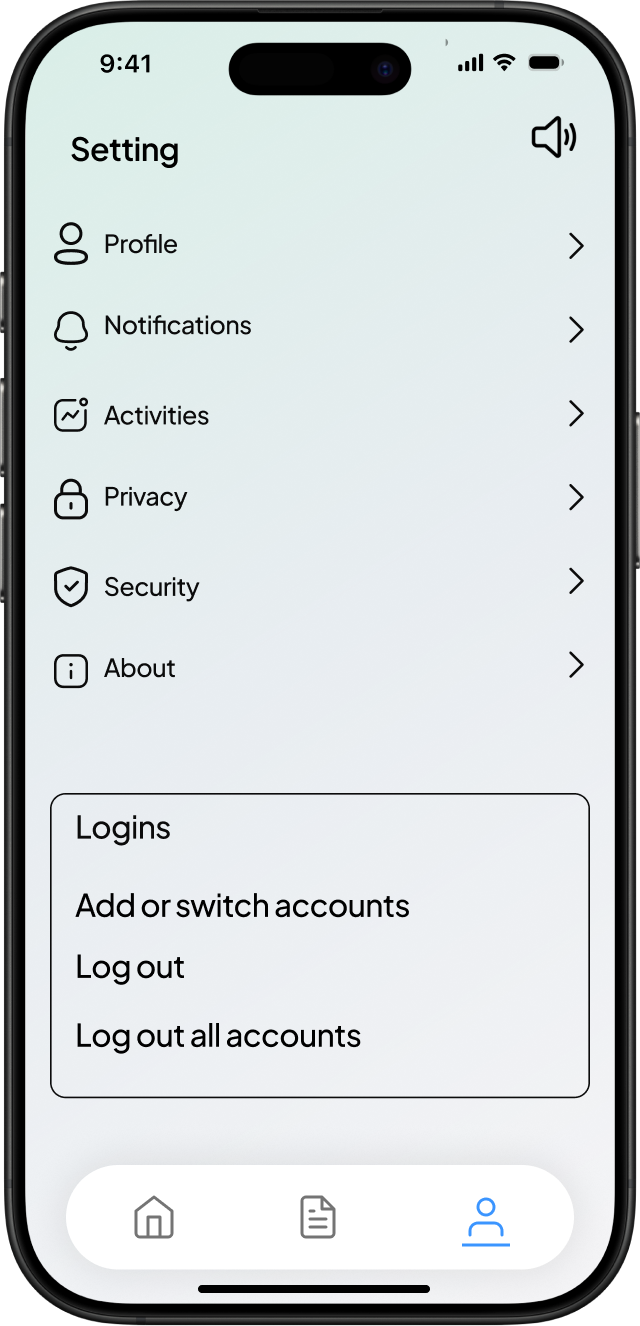
Original settings interface mockup with profile, notifications, privacy and account controls.
07 / 设计产出Outcomes

使用循环、穿戴形态、交互状态与内部结构Use loop, wearable form, interaction states and internal layout

  1. 日常使用循环Daily use loop

    出发准备 → 出行 → 察觉与决定 → 回顾Prepare → travel → notice and decide → review

  2. 穿戴形态Wearable form

    圆形外壳,一个中央按压入口A round housing with one central press target

  3. 交互状态Interaction states

    • 状态变化:声音与触感提示A status change, by sound and touch
    • 主人检查并决定The owner checks and decides
    • 断连重连,低电量充电Reconnect and recharge
  4. 内部结构Internal layout

    按压表面下的八个部件Eight parts beneath the press surface