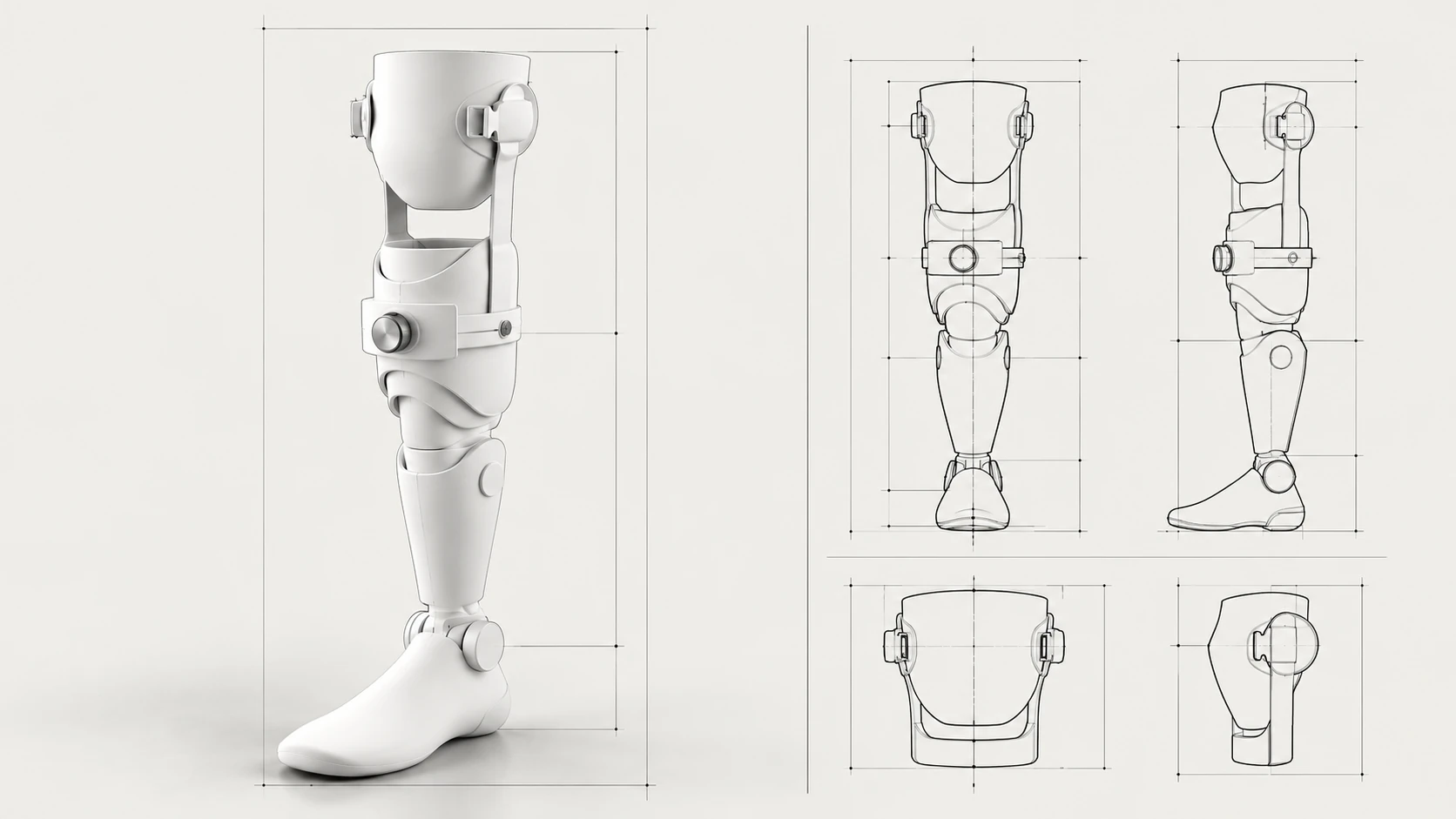
01 / 研究Research
桌面研究、竞品与访谈:成长期的孩子需要怎样的假肢Desk research, competitors and interviews: what a growing child needs from a prosthesis
桌面研究Desk research
孩子长得快,假肢要一再更换Children grow fast, so a prosthesis has to be replaced again and again
AAPM&R · PM&R KnowledgeNow · Pediatric acquired limb deficiency
次数按这个频率推算;身高与假肢长度为示意。Count worked out from that schedule; heights and lengths are illustrative.
- Ottobock可靠的医疗工具:安全、功能强,但缺少情感与乐趣A reliable medical tool: safe and functional, with little emotion or fun
- UNYQ时尚的个性化外壳:能表达自我,但功能与普及度有限A fashionable, personalised cover: expressive, but limited in function and reach
- Open Bionics酷的「超能力」装备:有科技感,但价格限制了普及Cool “superpower” gear: technology and imagination, but the price limits access
没有一家同时做到负担得起、好玩和持续服务No brand combines affordability, engaging design and ongoing service
受访者 A · 家长Interviewee A · parent
“孩子长得太快,假肢很快就不合适了。除了花钱,不合适的假肢还会把皮肤磨得很疼。”“My child grows so fast that the prosthesis soon stops fitting. Besides the cost, an ill-fitting one rubs the skin painfully.”
“现在的假肢又贵又让孩子显得格格不入,他会因此自卑。我们需要一个负担得起的伙伴,而不只是一件医疗器械。”“Today’s prostheses are expensive and isolating, and my child feels inferior. We need an affordable partner, not just a medical device.”
受访者 B · 儿童Interviewee B · child
“我的假肢太重了,戴着很累。我长得快,它很快就不合适,一动就磨皮肤,像穿了不合脚的鞋。”“My prosthesis is too heavy and makes me tired. I grow fast, so it stops fitting and hurts my skin, like bad shoes.”
“我讨厌我的假肢,又丑又只有一种颜色,很无聊。别的小朋友都有很酷的东西,我的像个工具。”“I hate my prosthesis. It’s ugly, one colour and boring. Other kids have cool stuff; mine looks like a dull tool.”
共同需求Shared needs
- 随成长调整Adjusts as the child grows
- 轻、不磨皮肤Light and kind to skin
- 好看、像自己的Looks like their own
- 负担得起Affordable
- 持续的服务An ongoing service
02 / 设计策略Design strategy
成长、可及性与自我表达Growth, access and self-expression
成长、可及与游戏化Growth, access & play
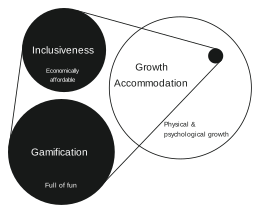
- 成长Growth
- 把与身体接触的部分,和可随成长更换的模块分开。Separate the body interface from modules that can change as the child grows.
- 可及Access
- 用持续服务替代「每次更换都重新购买」。Explore a continuing service instead of treating every replacement as a new purchase.
- 游戏化Play
- 为孩子自己选择外壳与「未来外观」留出空间。Make space for the child’s own shell choices and future looks.
从原则到服务场景From principles to service scenarios
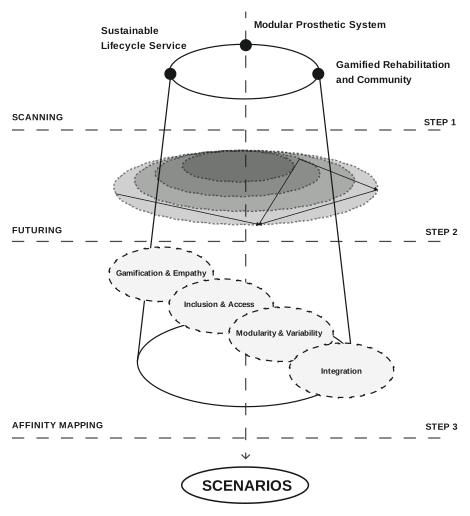
- 扫描Scanning
- 围绕成长、可及性与自我表达确定设计原则。Define principles around growth, access and personal expression.
- 未来推演Futuring
- 探索租赁与订阅等替代服务模式。Explore rental and subscription as alternative service models.
- 亲和图Affinity mapping
- 把模块化、包容与游戏化串成服务场景。Connect modularity, inclusion and play into service scenarios.
03 / 产品结构Product structure
可单独更换的模块Modules replaced one at a time
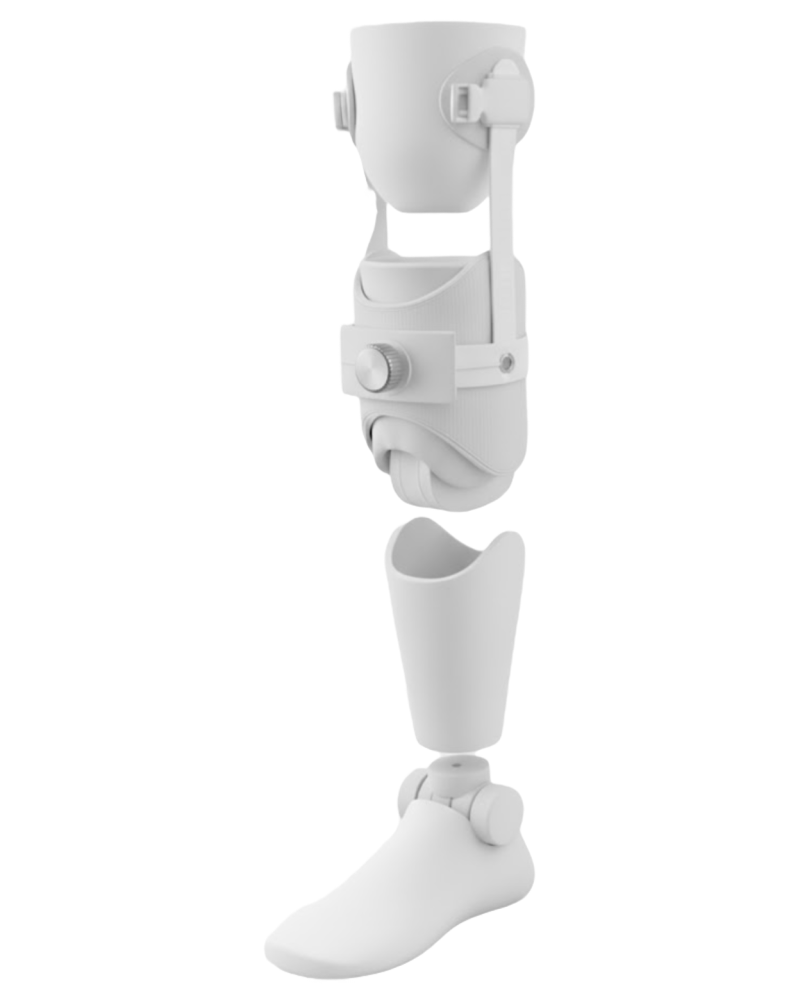
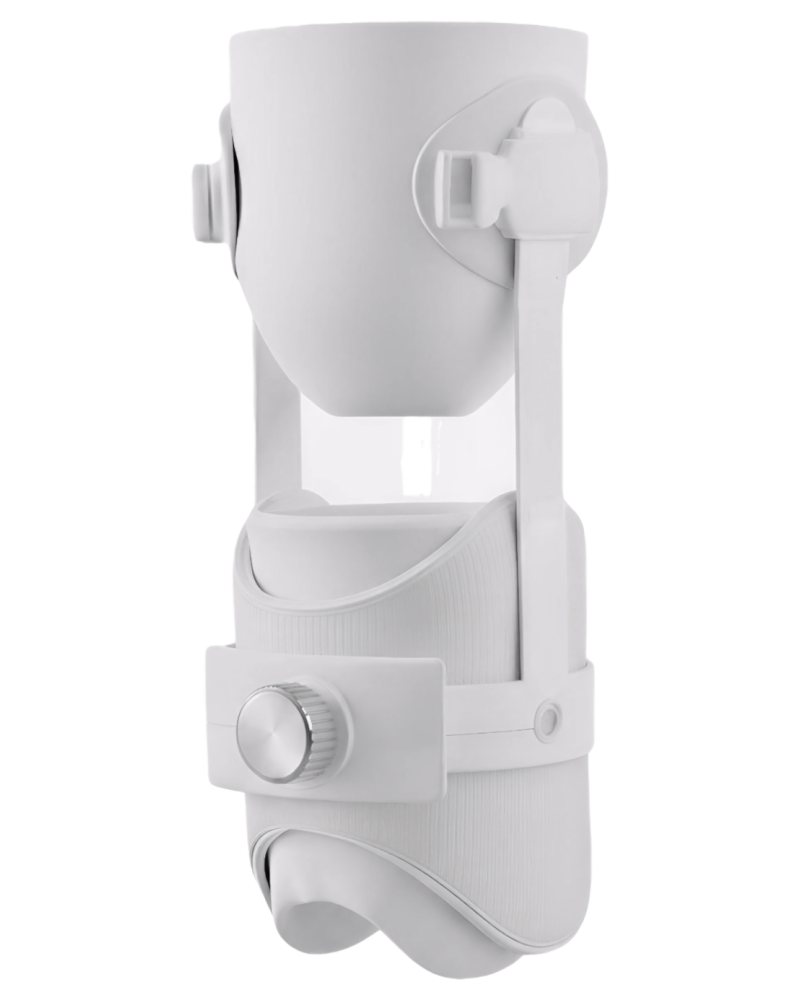
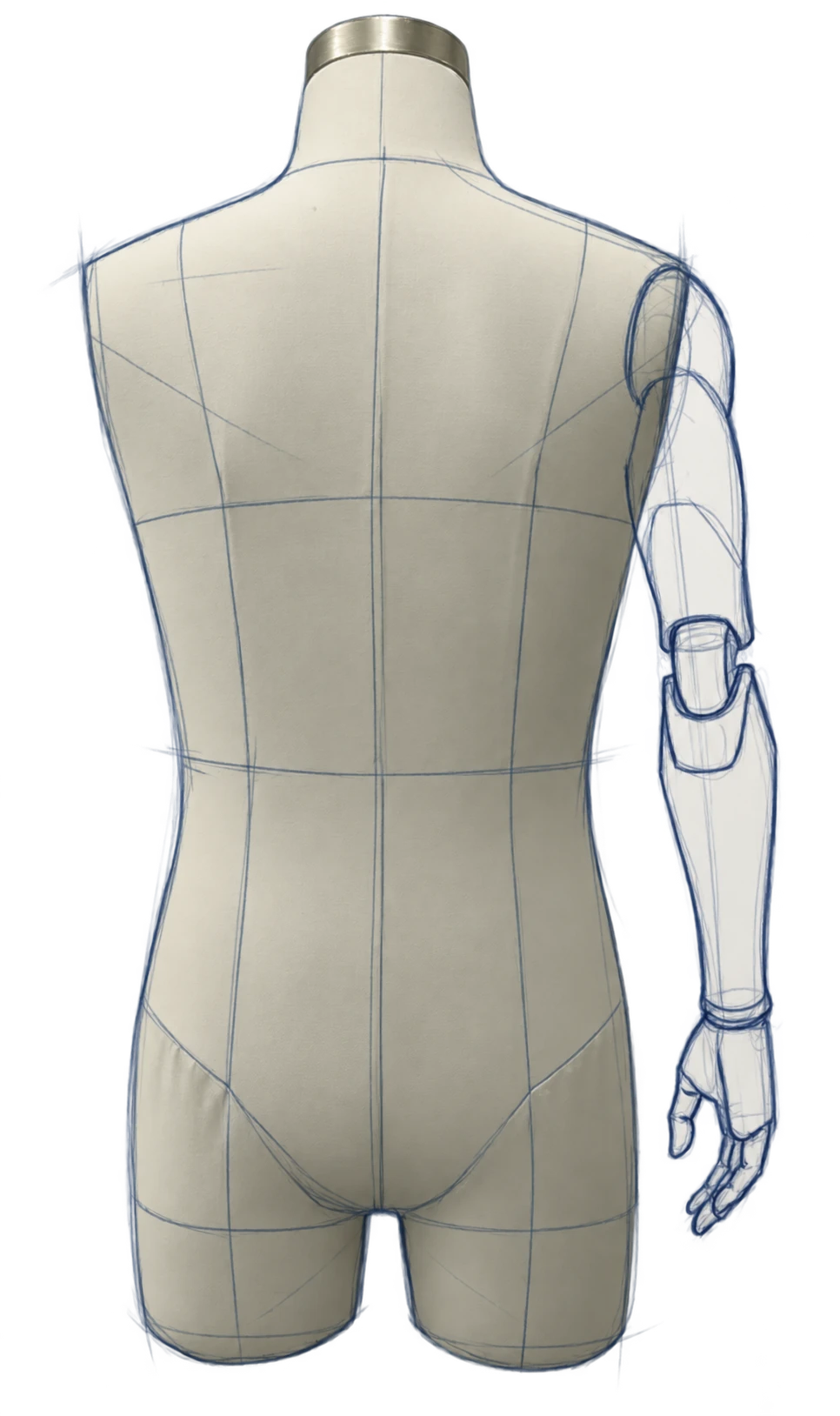
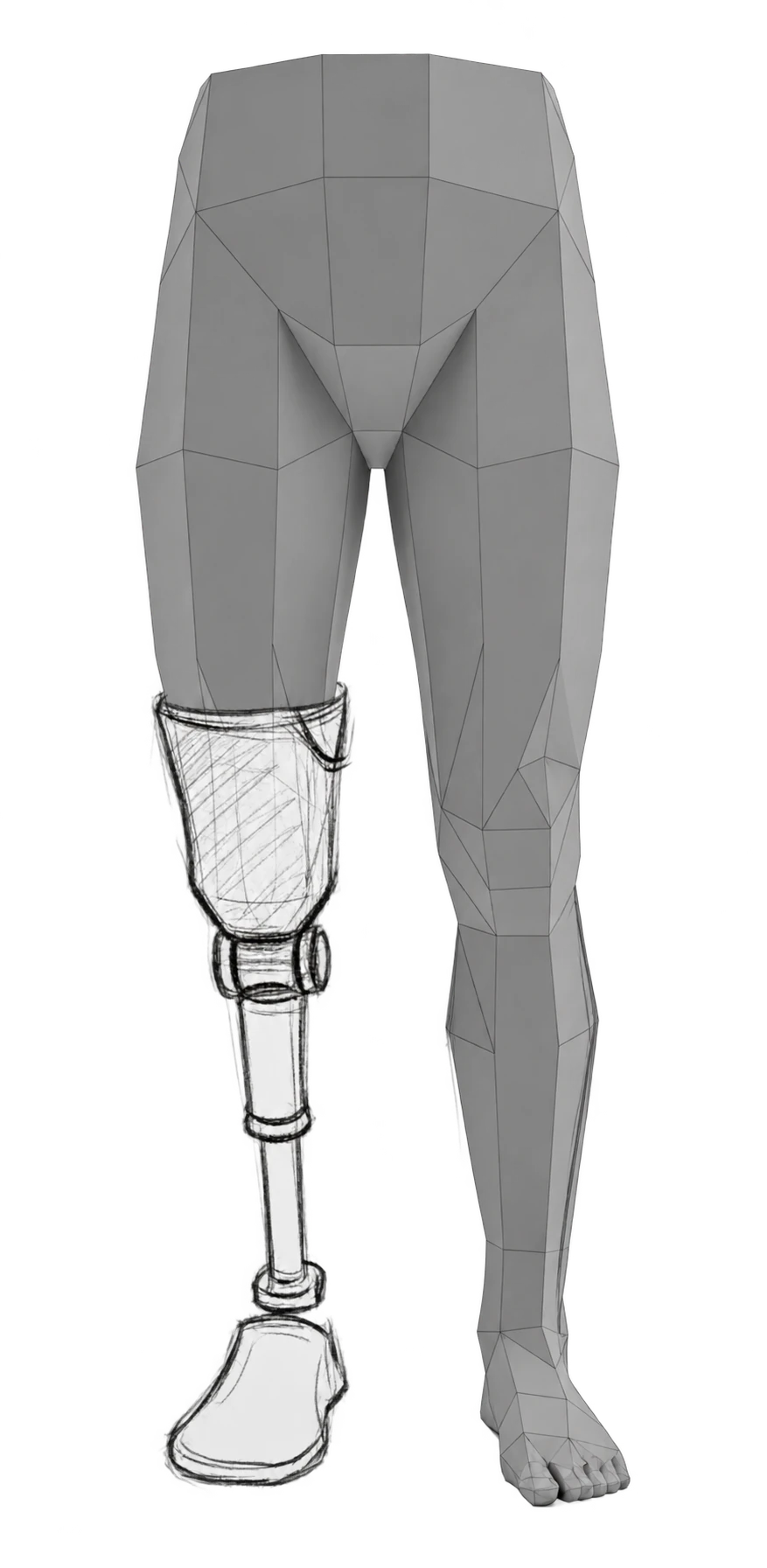
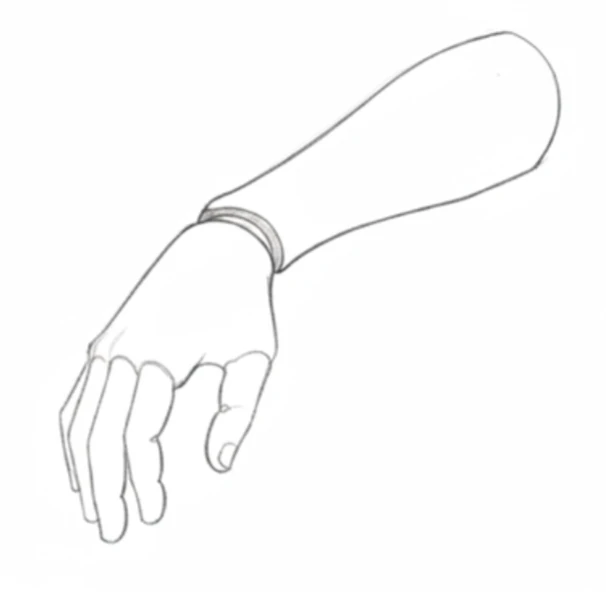
04 / 形态发展Form development
身体接触与外形探索Body interface and shape studies
05 / 数字体验Digital experience
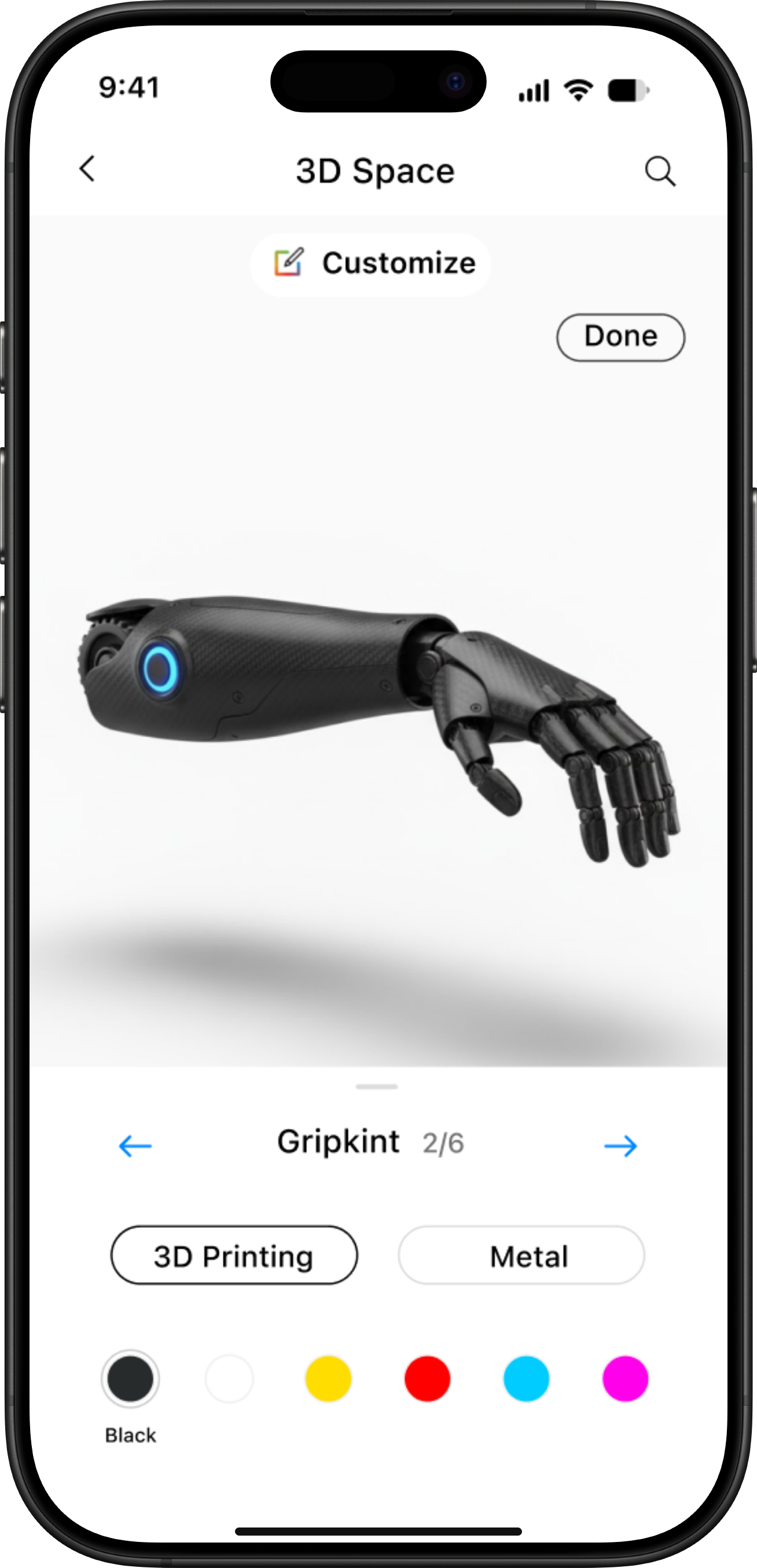
孩子参与外壳设计Children help design the shell
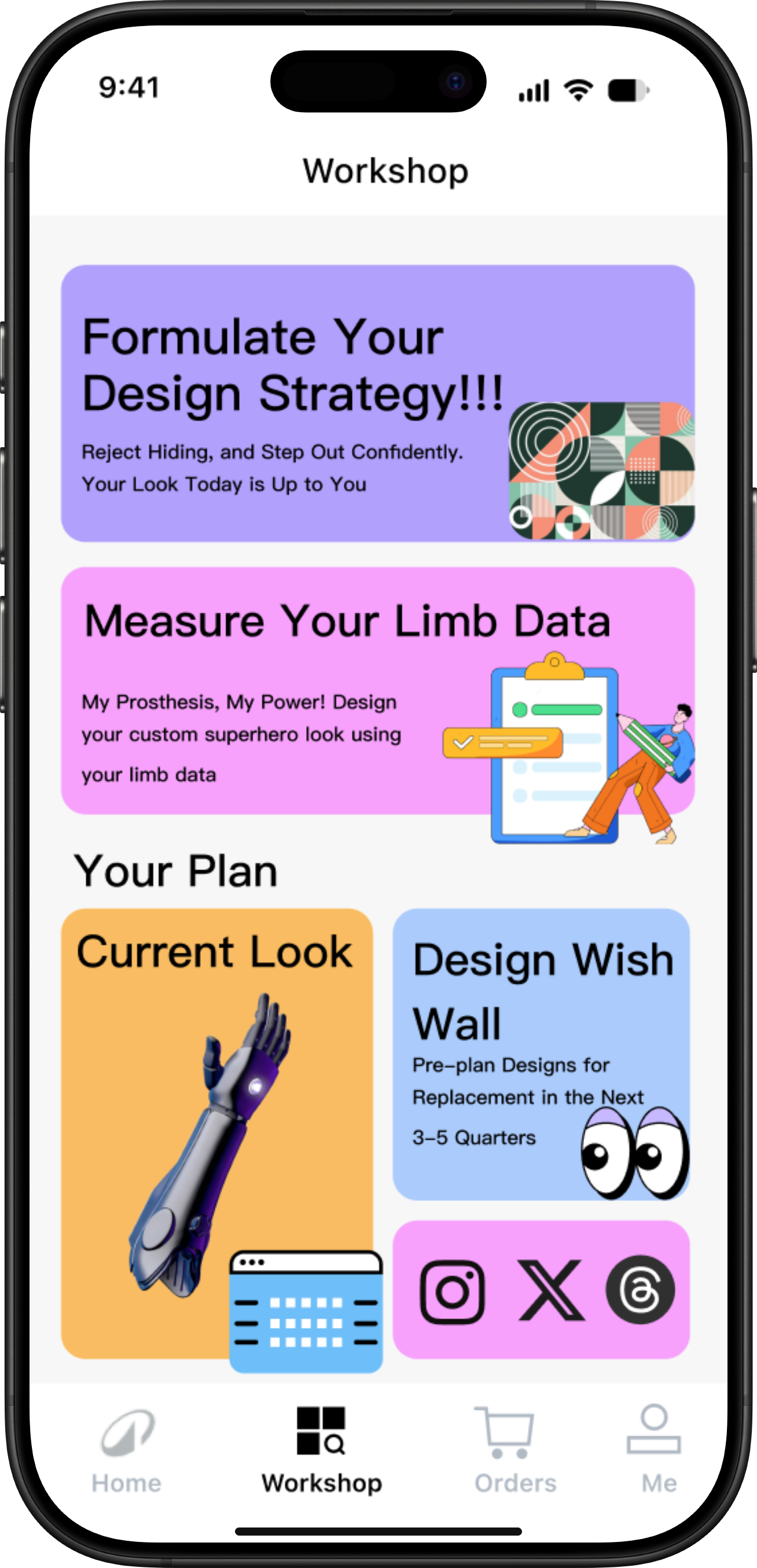
06 / 成长与适配Growth & fit
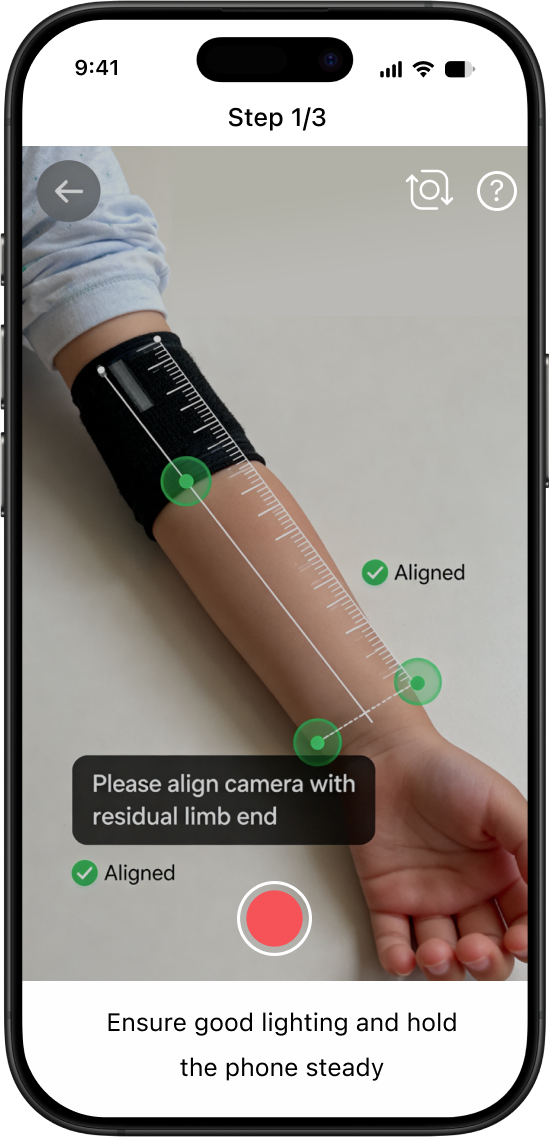
成长提醒与引导式尺寸记录Growth alerts and guided size checks

07 / 服务开发Service development
订购新外壳,返还旧外壳Ordering new shells, returning old ones
围绕孩子的服务网络A network around the child
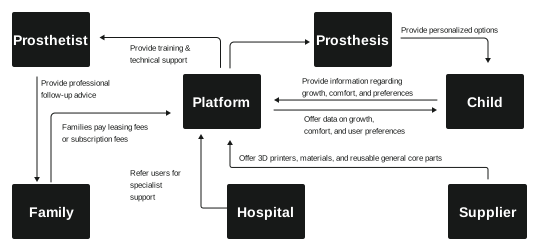
新外壳New shell
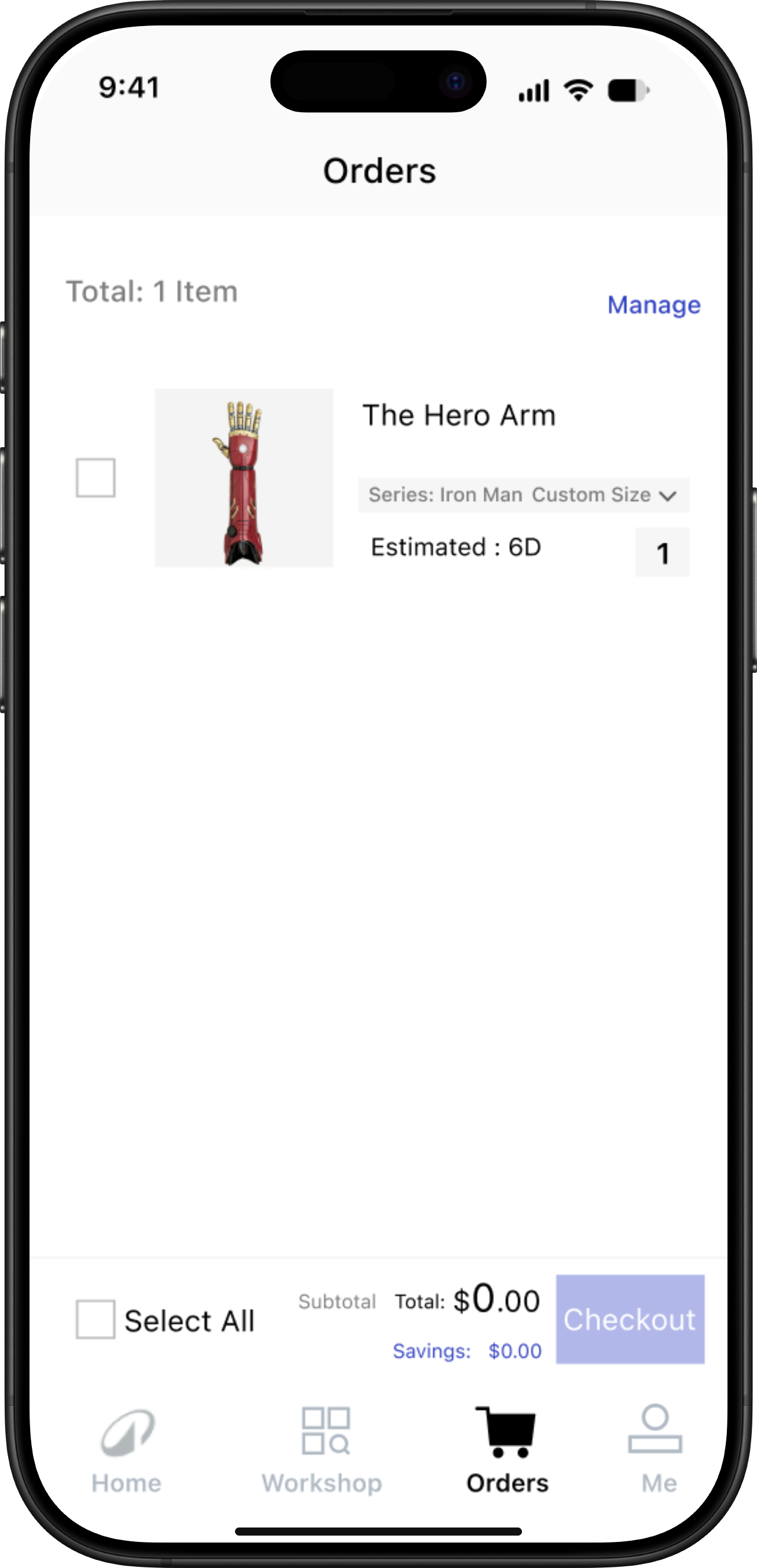
返还追踪Return tracking
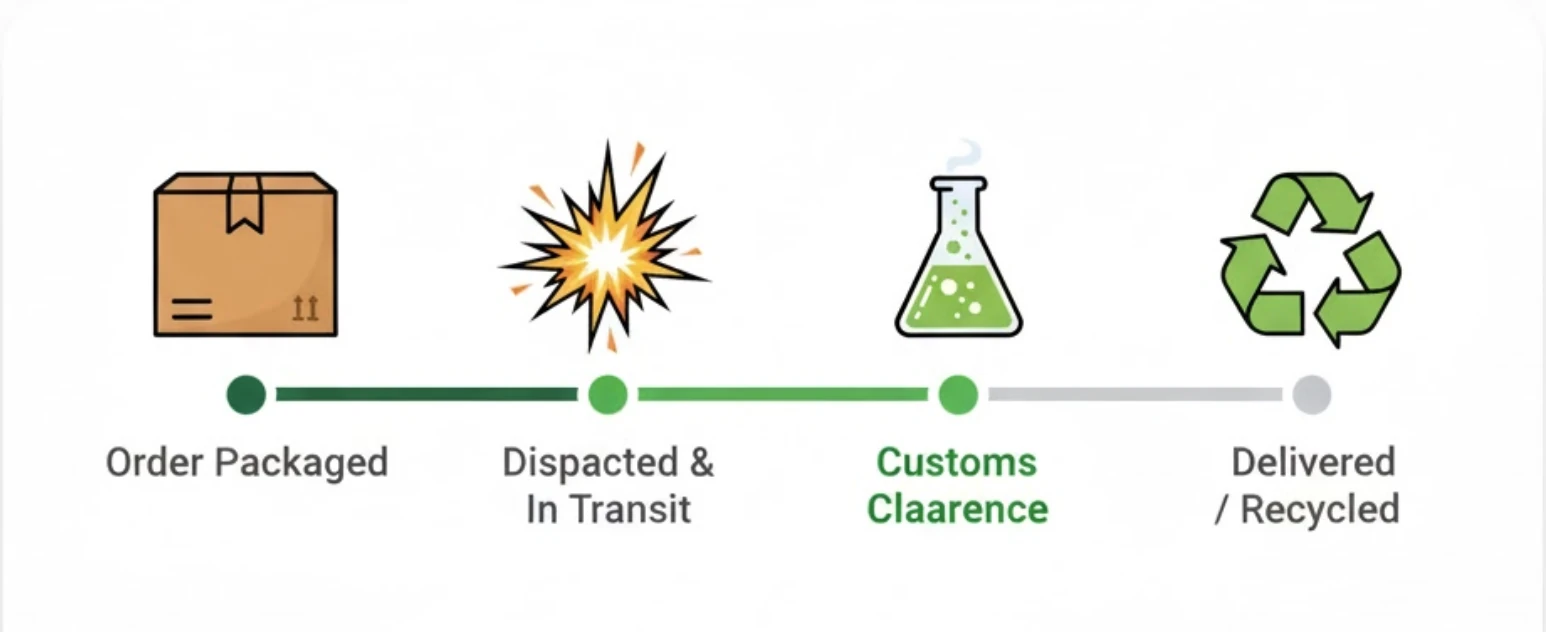
08 / 循环策略Circular strategy
旧外壳的回收、评估与再利用Collecting, assessing and reusing old shells
返还 → 评估 → 考虑再利用Return → assess → consider reuse
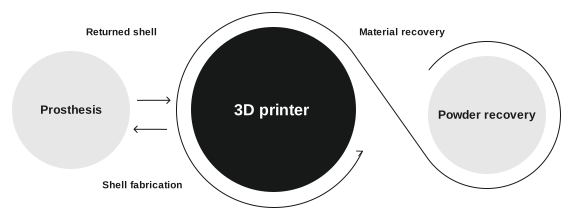
- 服务循环Service loop
- 交付新外壳时,同步回收旧外壳。Connect delivery of a new shell to collection of the old one.
- 材料把关Material gate
- 回收材料先经评估,才考虑作为打印原料再利用。Assess recovered material before considering reuse as printing feedstock.
09 / 设计产出Outcomes
模块化产品、外壳定制、成长服务与循环策略Modular product, custom shells, growth service and circular loop
模块化结构Modular structure
接受腔、连接件与末端模块,可单独更换Socket, connectors and terminal modules, replaced one at a time
外壳定制Custom shells
孩子参与选择外壳,3D 打印小批量制作Children help choose their shells; small 3D-printed batches
成长服务Growth service
- 成长提醒Growth alerts
- 引导式尺寸记录Guided size records
- 专业复查Specialist review
循环策略Circular loop
交付新外壳时回收旧外壳,评估后再利用Collect the old shell with each new one; assess before reuse